
Our Technology
Fuel that doesn't burn completely is money going out of the exhaust. Over years of development and field trials in Indian operations, we have refined DeCarb into a fuel conditioning technology that makes more of every litre become useful work, in diesel, petrol, marine fuel and furnace oil.
Fuel conditioning for a complete burn
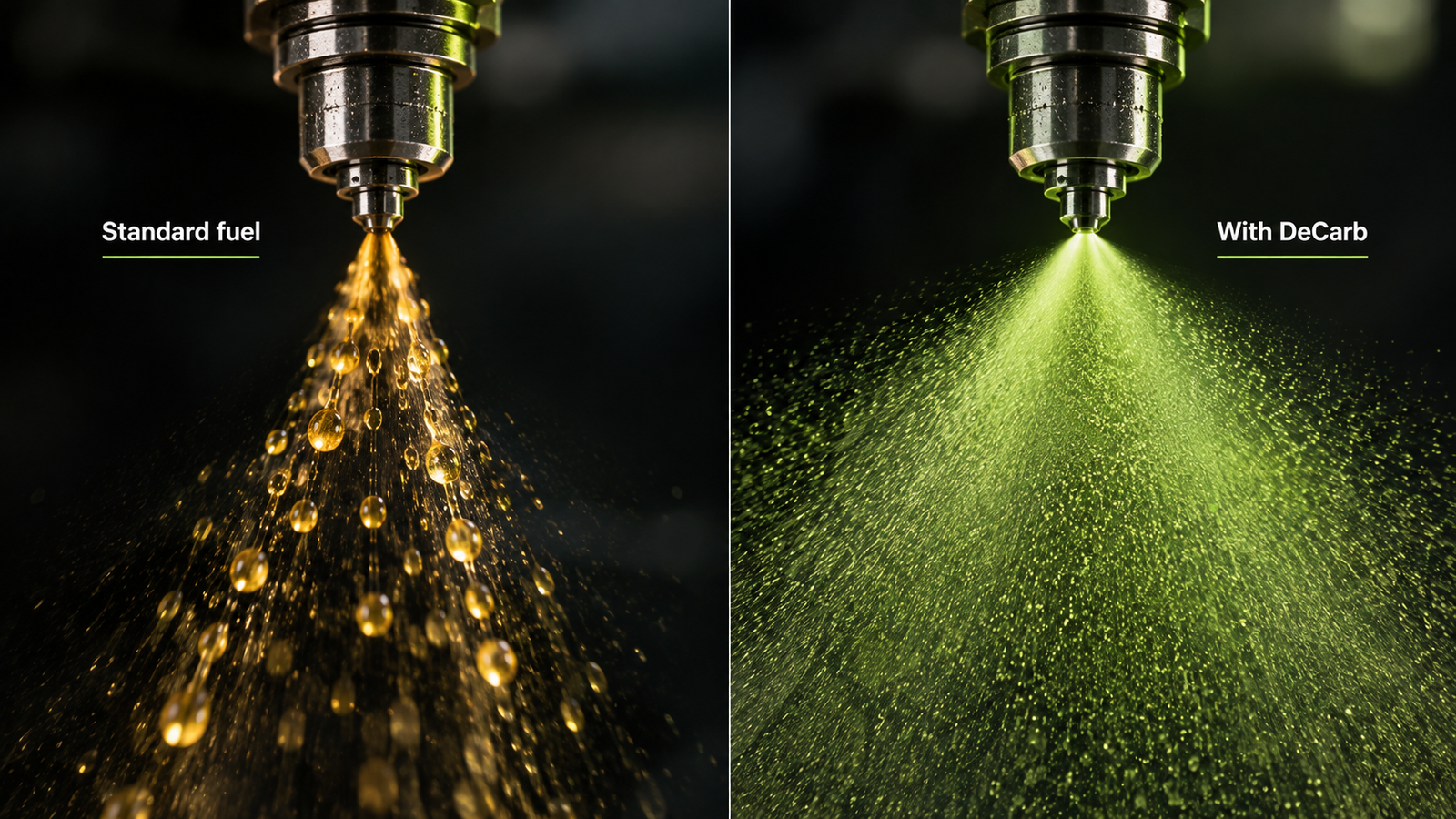
DeCarb is dosed into the fuel you already buy, at one millilitre per litre. Its actives, derived from vegetable oils, work on the fuel before combustion: they lower the surface tension between fuel molecules and restructure heavy, branched molecules into simpler linear ones, so the fuel atomises into a finer spray, burns more completely and leaves less carbon behind. More of each litre turns into kilometres, tonnes, kilowatt-hours or heat, and less leaves as smoke, deposits and wasted heat.
It is non-metallic and biodegradable, it does not alter the fuel's chemical properties, and treated fuel still meets BS VI, EN590 and ASTM standards, verified by NABL-accredited laboratories. It goes into the tank, not into the engine: no new engines, no new burners, no capital project. Suitability is established by technical evaluation of fuel grade, equipment category and duty cycle, and the result is measured on your machines, in your units.
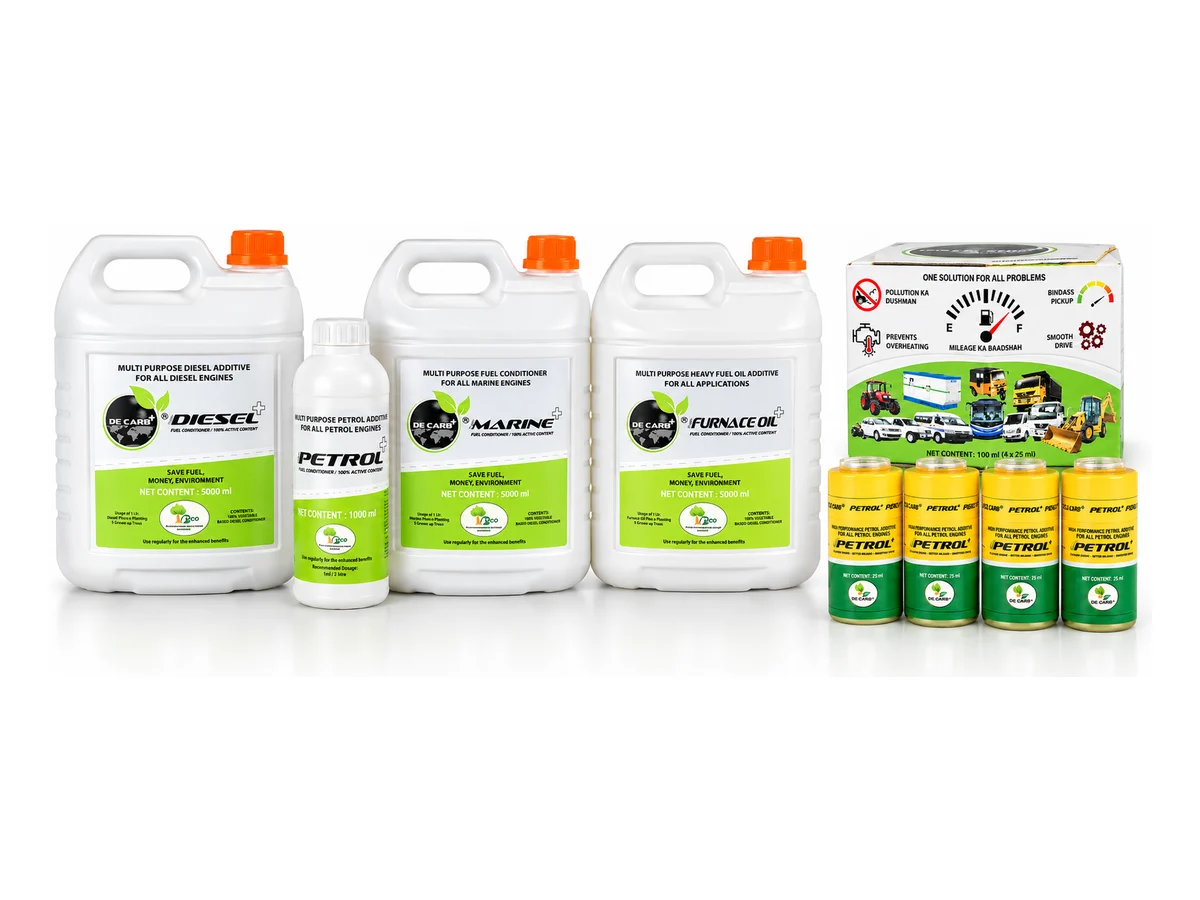
One technology, four fuels: Diesel Plus, Petrol Plus, Marine Plus and Furnace Oil Plus.
Problems we solve
Across fleets, mines, plants and everyday vehicles, the same three pressures appear together.
Fuel is your biggest controllable cost
- Mileage slipping month on month
- Prices you cannot control
- Purchased energy not fully converted to work
Consumption is the one lever you can pull. DeCarb goes into the fuel you already buy and makes every litre work harder.
Shop DeCarb Diesel Plus ›Your assets must keep running
- Carbon deposits, smoke and rough running
- Injector and burner fouling
- Ageing equipment you cannot replace yet
Cleaner combustion means fewer deposits, fewer cleaning stops and more useful life from the machines you already own.
Shop DeCarb Furnace Oil Plus ›Every result must be provable
- Customers and lenders want emissions data
- Targets set at group level, delivered at site level
- No budget for unproven promises
Every programme starts with a measured trial on your own equipment. You scale on evidence, never on a promise.
Book a free assessment ›A complete care for every fuel user
One technology, formulated for diesel, petrol, marine fuel and furnace oil, working alongside your normal fuel and maintenance routine to deliver a complete solution for fuel cost, emissions and equipment health.
- Lower fuel billsRecorded savings from 7.4% to 18.18% across buses, furnaces and mining fleets. That money goes straight to your bottom line.
- Lower emissions40% lower dumper exhaust emissions and 669 tonnes of CO₂ cut in one year at a government mine. Real numbers for your ESG report.
- Cleaner engines and burnersLess carbon in injectors, valves, burners and the combustion path means fewer cleaning stops and smoother running.
- Works with what you runTrucks, cars, dumpers, generators, vessels, boilers and furnaces. One technology, four formulations, no engine modification.
- Works with today's fuelsFormulated for E20 petrol, BS-VI diesel, marine fuel and furnace oil.
- Built for islands and remote sitesWhere every litre of diesel is shipped in, DeCarb stretches generator, ferry and fleet fuel and lowers the import bill.
- Proof before you scaleEvery programme starts with a measured trial on your own equipment. You scale on evidence, never on a promise.
Results are specific to the equipment, fuel, period and method recorded and are not a guarantee for other operations. Avoided emissions are not carbon credits.
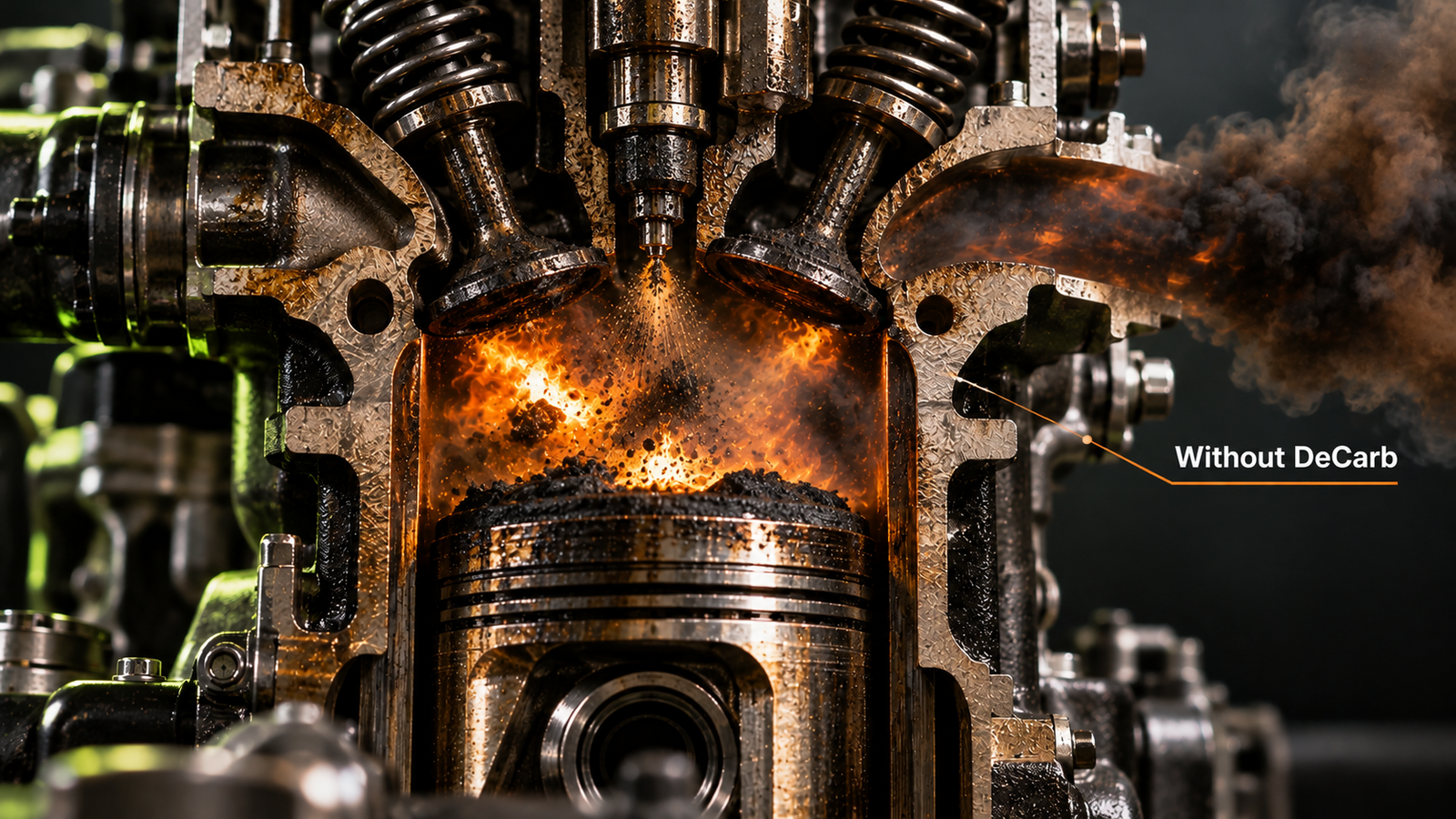
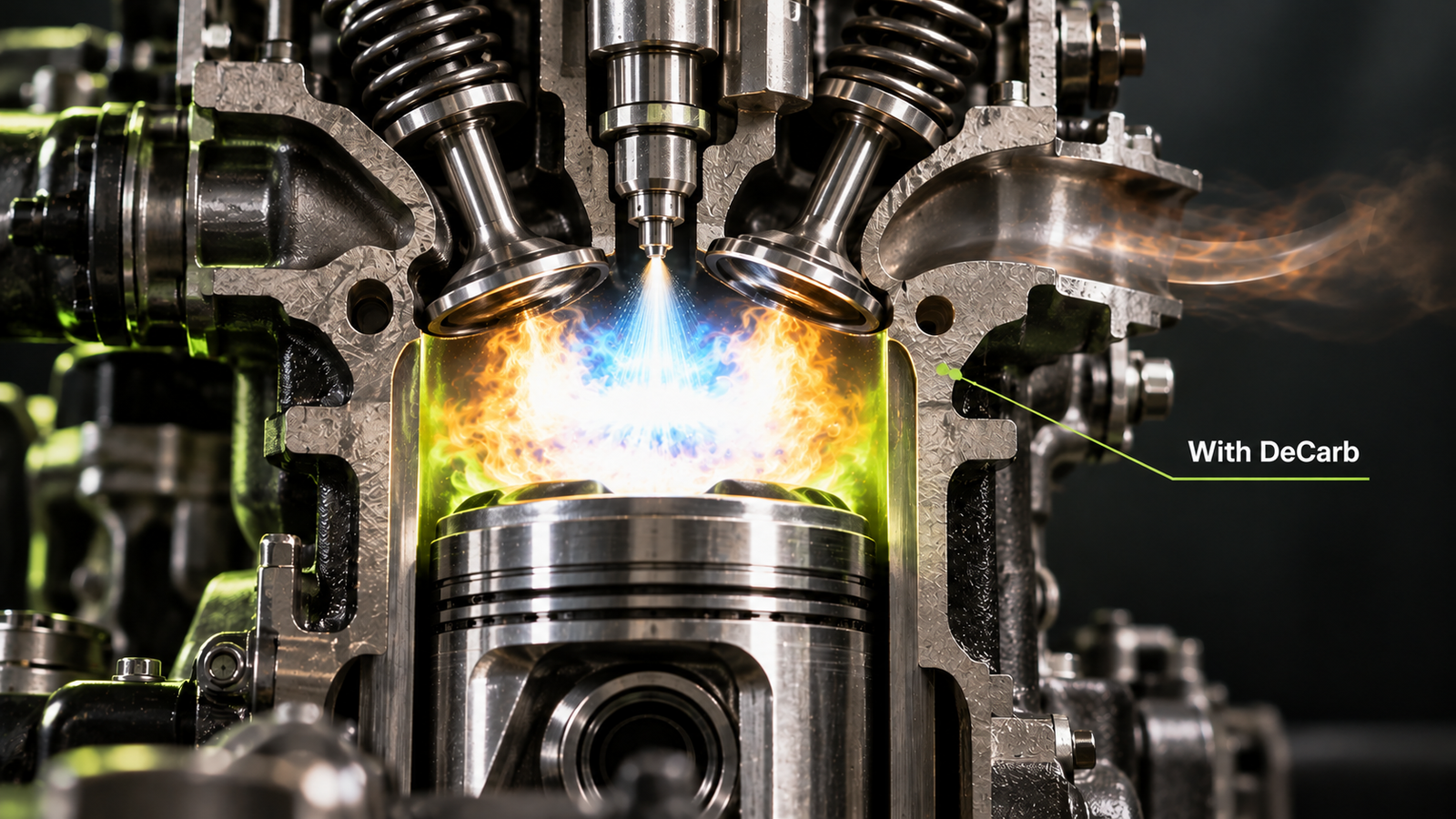
Illustrative diagrams
Why DeCarb?
- Recorded savings from 7.4% to 18.18% across buses, furnaces and mining fleets
- 40% lower dumper exhaust emissions recorded at a government mine
- 1 mL treats 1 litre: a 1 L bottle conditions 1,000 L of fuel
- Works with what you run: trucks, cars, DG sets, vessels, boilers, furnaces
- No engine or burner modification; meets BS VI, EN590 and ASTM fuel standards
- Biodegradable, non-metallic, made from plant-derived actives
- ISO 9001:2015 certified, made in our own plant in Telangana
- FICCI Best Green Product Award 2025 · Telangana Best Innovation 2018
- Tested with IIT, BITS, EPTRI and NABL-accredited labs
- Pack sizes from 100 mL to 20 L, free shipping on prepaid orders
Five ways DeCarb makes every litre count
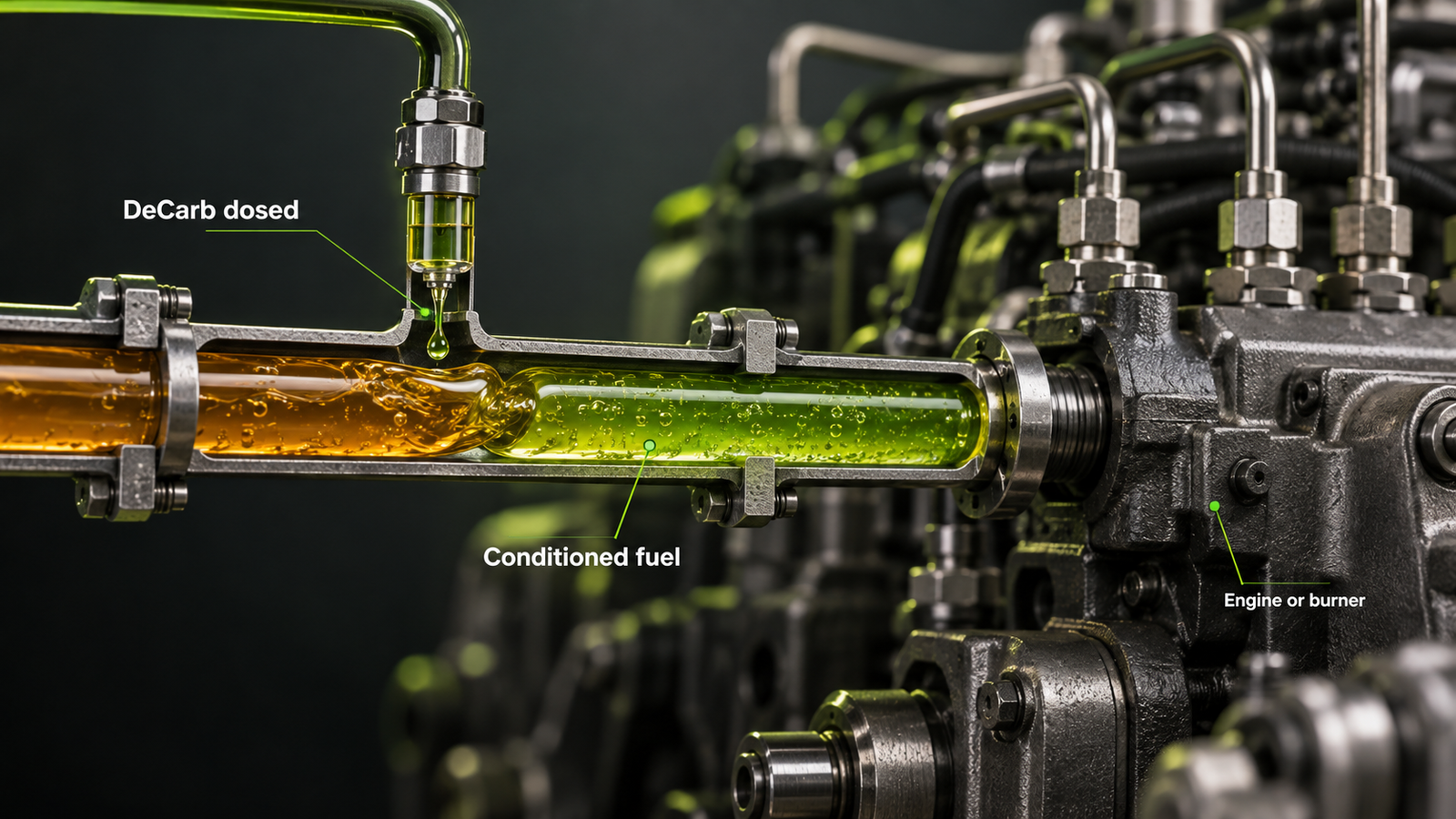
It goes into the fuel you already buy: no new engines, no new burners.
 01
01Fuel conditioning
DeCarb conditions the fuel before it reaches the engine or burner, so it arrives ready to burn.
 02
02Finer atomisation
Better-conditioned fuel breaks into a finer spray, giving the air more surface to reach.
 03
03Combustion support
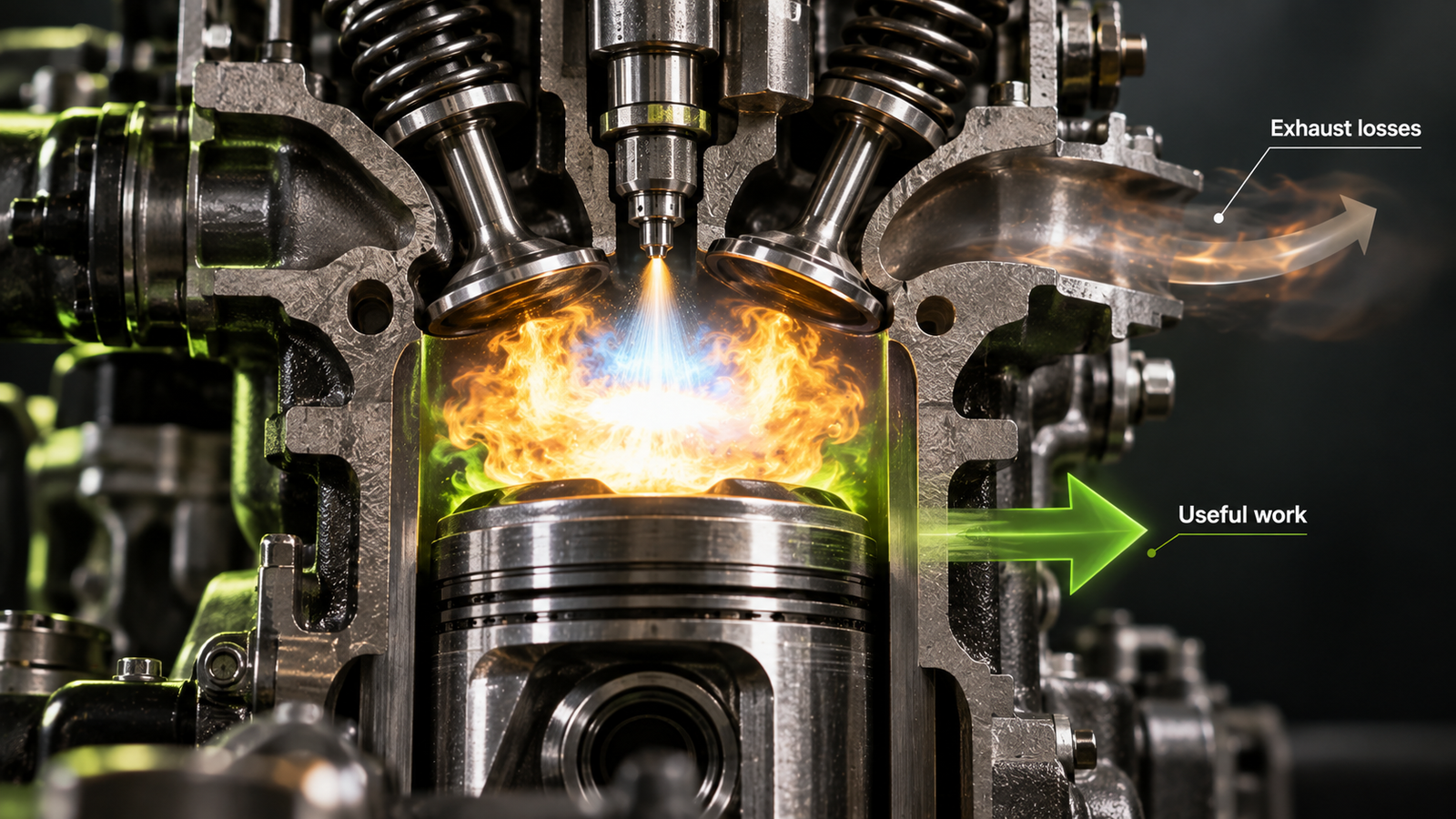
A more complete burn turns more of every litre into useful work instead of exhaust.
 04
04Less residue and deposits
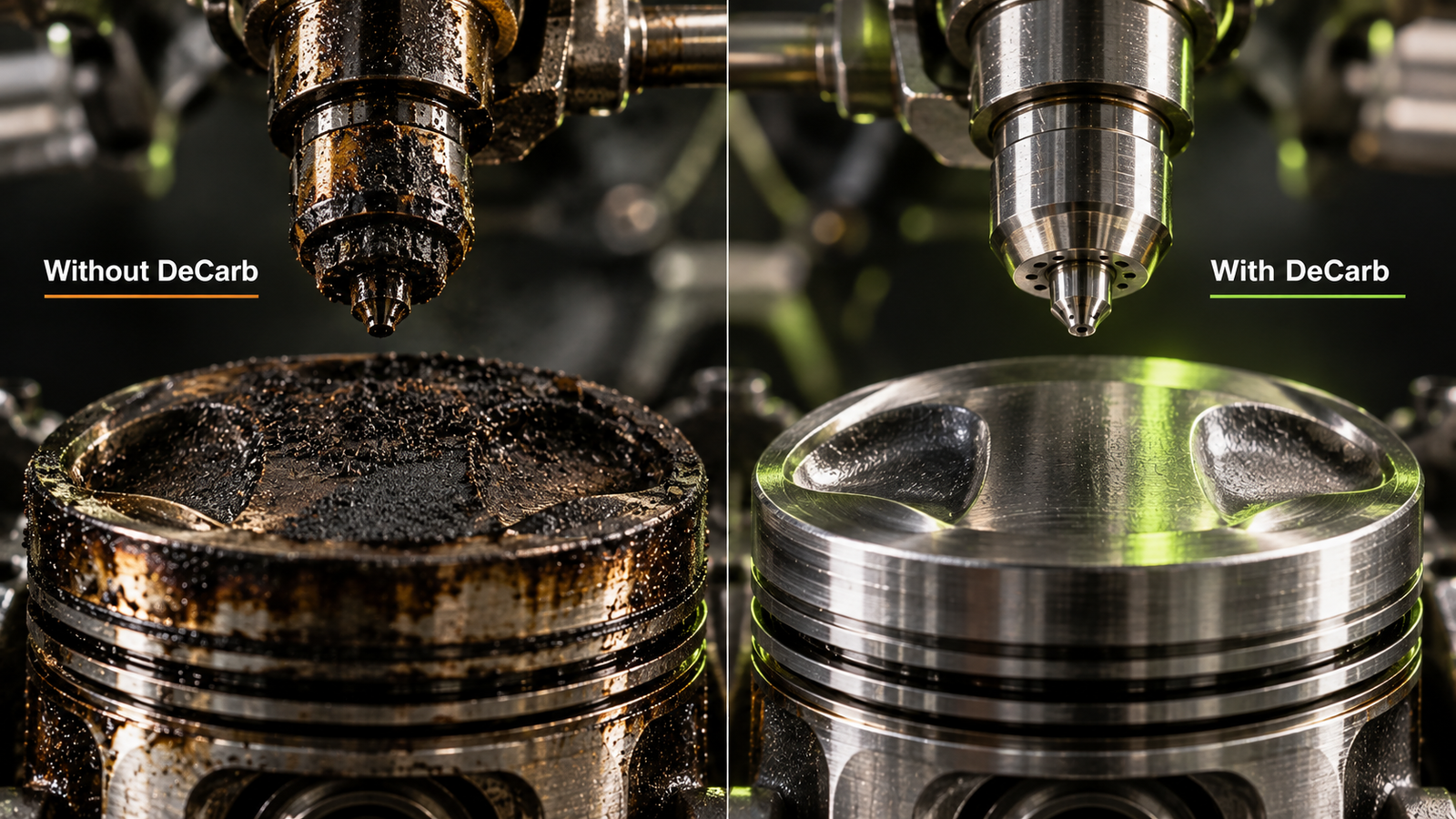
A cleaner burn leaves less carbon behind in injectors, burners and the combustion path.
 05
05Better energy use
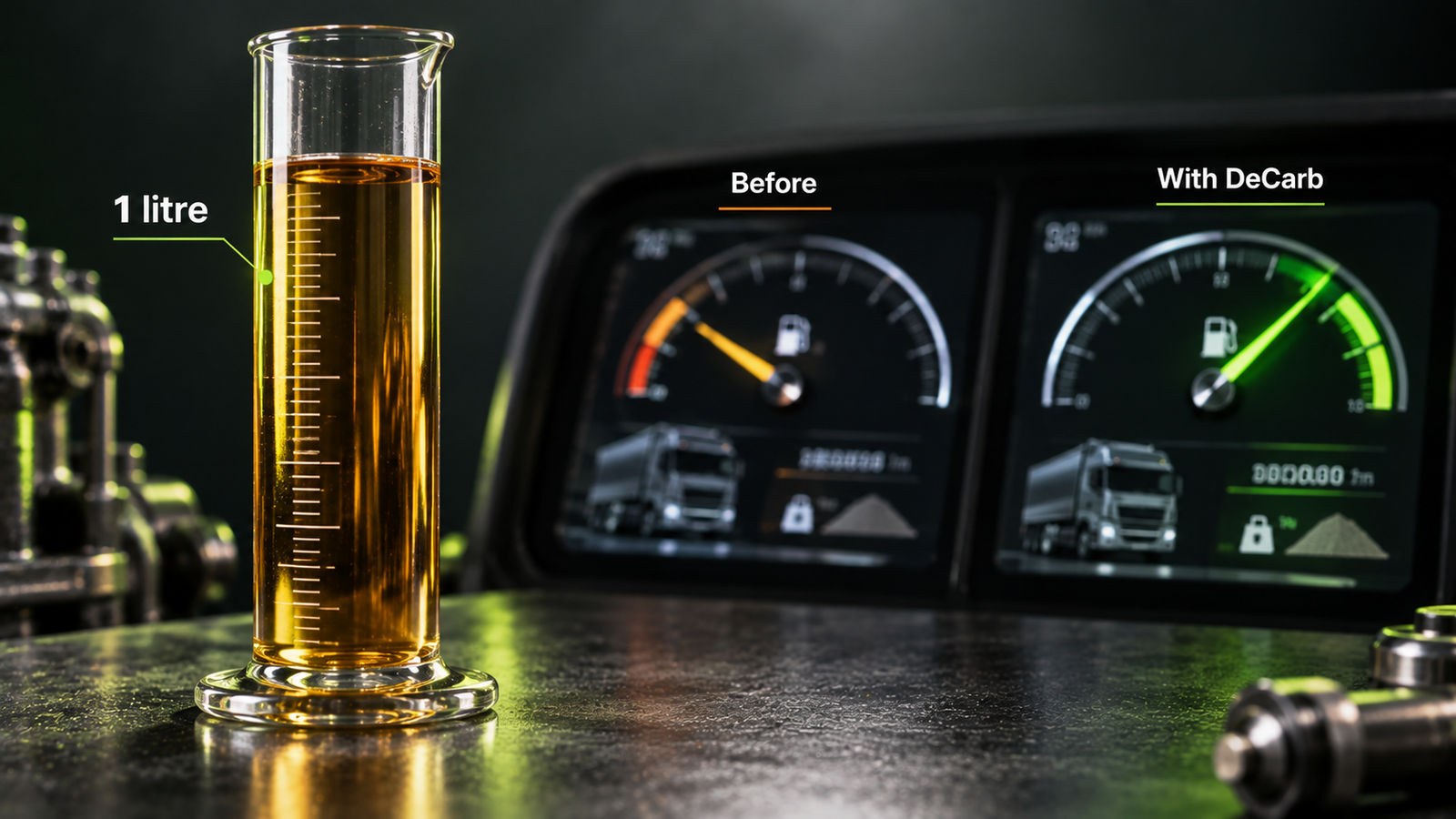
More output from the same fuel: more kilometres, tonnes, kilowatt-hours or heat per litre.
Measured on your machines. Not in a brochure.
How much each effect contributes depends on your fuel, equipment and duty cycle. That is why we set a baseline from your own records, run a controlled trial, and give you a signed before-and-after comparison in your units.
How much each effect contributes depends on your fuel, equipment and duty cycle. That is why we set a baseline from your own records, run a controlled trial, and give you a signed before-and-after comparison in your units.Fuel that sits in a tank loses money before it is ever burned
Stored diesel oxidises, picks up water, grows sludge and microbial residue ("diesel bug") and darkens. The result is tank clean-outs, blocked filters, pump wear, lost volume and poor combustion downstream. This is sharpest where fuel is shipped in and stored for weeks in heat and humidity: island power stations, resort depots, mine sites and remote DG farms. DeCarb conditions fuel from the storage tank onward, so the same dose that cleans combustion also keeps the fuel itself stable.
Laboratory results on treated fuel; field outcomes depend on fuel, storage and handling.
What it does in storage
- Disperses heavy hydrocarbons and prevents agglomeration and tank-bottom sludge
- Slows oxidation, gum and sediment formation
- Improves water separation and reduces emulsions
- Limits microbial growth by removing the nutrients it feeds on
- Non-metallic, low-dose, refinery-compatible: standard injection points, no new hardware
How a pilot runs
- Pilot dosing in one storage tank and one downstream batch
- Monitor ASTM fuel parameters, sediment, water and microbial counts for 60–90 days
- Emission spot checks on representative engines
- Scale to full fuel handling with SOPs and operator training
| Catalytic additive | DeCarb | |
|---|---|---|
| Storage stability | Minimal effect | Strong effect |
| Sludge & residue control | Limited | High reduction |
| Emissions reduction | Narrow (one pollutant) | Broad spectrum |
| Added metals | Common | None |
| Dosing | Complex systems | Low dose at tank outlet or batch |
Where DeCarb is used
Every sector measures fuel differently. Pick yours to see what DeCarb is worth in the units you already track.
- Measured in
- km per litre
- Product
- DeCarb Diesel Plus
- Measured in
- litres per hour or per tonne
- Product
- DeCarb Diesel Plus
- Measured in
- kWh per litre
- Product
- DeCarb Diesel Plus
- Measured in
- tonnes per day
- Product
- DeCarb Marine Plus
- Measured in
- litres per tonne of product
- Product
- DeCarb Diesel Plus / Furnace Oil Plus
- Measured in
- kg of oil per hour
- Product
- DeCarb Furnace Oil Plus
Product relevance is established by technical evaluation of fuel grade, equipment category, duty cycle and operating conditions, not by sector alone.
DeCarb will cut your fuel bill and your emissions, keep your engines and burners cleaner, and prove it on your own machines.
Less diesel for every tonne moved at a cement company's limestone mine
Same dumpers, same excavator, same haul roads. Diesel per tonne dropped from 0.16 to 0.13 litres, and fuel per operating hour fell 16.66%. Signed off by mine management.
| Operation | Result | Period |
|---|---|---|
| Government mining company Five dumper groups, two opencast mines | 10.8–13% less HSD | 2016–18 |
| Copper products plant Furnace oil, 44.48 → 40.26 L/hour | 9.5% less oil | 2021 |
| State transport buses Five buses over 42,412 km | +7.4% km/l | Oct–Nov |
| Dumper exhaust emissions GK OCP & PKOC mines, one-year study | −40% | 2017–18 |
What is DeCarb worth to your operation?
Set DeCarb’s cost against your own improvement assumption: net saving, return on every rupee and the break-even point, for your sector and currency.